









Spring has officially begun, yet at 3,000 meters on the Presena Glacier we are still in the dead of winter. The snow report shows 400 cm of snow at high altitude, and we have very likely not yet reached the seasonal peak—a massive amount, though nothing unusual for one of the snowiest areas in Italy. Here the glacier is the geographic and historical landmark of the Adamello range: its snows witnessed tragic chapters of World War I, while also welcoming illustrious figures such as Pope John Paul II.

In winter, the Presena becomes a training ground for pro skiers and snow enthusiasts who choose Passo del Tonale as their ski destination; its high altitude allows the ski lifts to open as early as November, with a season that runs non-stop until June.
During the summer, however, the snow retreats rapidly, uncovering not only relics from the First World War, but also a harsh truth: the glacier is dying. Its snow surface shrinks year after year, diminishing this precious expanse of perennial snow and ice. Once upon a time, heavy winter snowfalls and milder summer temperatures allowed enthusiasts to ski even in summer, but for several years now global warming has forced tourism operators to halt summer skiing in order to protect it. Rapid melting also called for a rescue operation using geotextile sheets that cover the glacier, shielding it from sunlight and rain.
The results have been extraordinary: a full 2 meters of snow saved every year and a glacier that for now has been spared complete disappearance.
You can never have too much snow
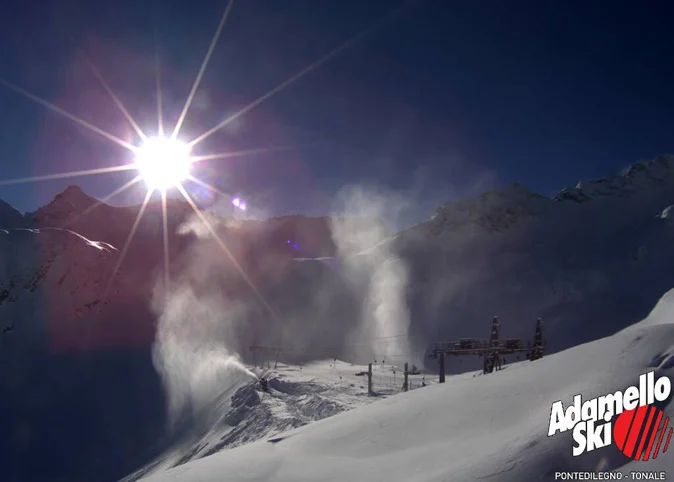
In winter, alongside heavy natural snowfall, the artificial snowmaking systems go into action as part of the Presena Glacier conservation project.
Low midwinter temperatures make it possible to produce large quantities of snow using fewer resources in terms of electricity and water; the man-made snow supplements the natural snowpack, supplying the raw material needed to preserve the snow surface.
That is why during the winter season, despite the huge amount of natural snow available, the snow cannons keep working non-stop to help save one of Italy’s last skiable glaciers.
Programmed snowmaking does not play second fiddle to the protective sheets, but rather complements them: while the “magic blanket” shields the glacier from the sun in summer, artificial snow joins forces with natural snow in winter to build a layer thick enough to withstand even the most scorching summers.


No comments yet