








 We receive and publish unaltered the press release from FederFuni Italia regarding the issue of the IMU property tax on cableway installations.
Extremely heavy repercussions across all mountain territories and beyond linked to the application of the IMU tax.
Dramatic economic, social, and fiscal consequences. Political convergence is needed to remedy the outcome of an inconsistent ruling based on poor knowledge of the sector and on a regulation flawed from its inception.
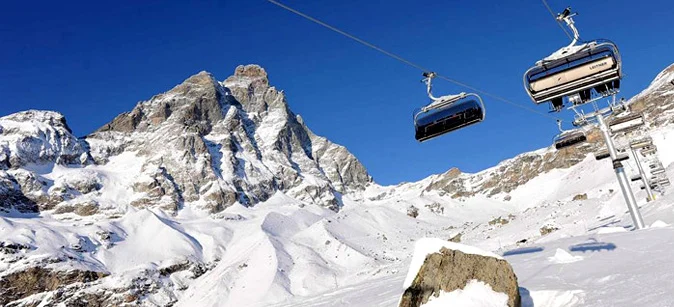
The entire mountain community, from the Alps to the Apennines, is mobilizing against Supreme Court (Cassazione) ruling no. 4541, which downgrades cableway installations from a public transport service of public utility to commercial activities serving ski slopes, thereby subjecting them to the payment of the IMU property tax.
“Federfuni Italia reiterates the total inconsistency of this ruling, undoubtedly stemming from a lack of understanding of the specific nature of the sector and the errors made when the original 2006 regulation was enacted, as well as the Association’s firm resolve to pursue every possible avenue and action to prevent repercussions—economic and otherwise—that are utterly unsustainable not only for lift operators but for the entire mountain economy.
The ruling is flawed because it attributes to cableway installations a “predominant commercial character over that of a public service.” This is in complete contradiction with national and regional sector regulations as well as European ones, all of which consider cableway installations to be public transport systems operating under concession.
Cableway installations are public transport systems operating under concession that provide services of general interest!
Cableway installations are being equated with real estate, which they are not; a building—even an industrial one—endures and appreciates over time, whereas a structure built for a cableway installation is constructed solely and exclusively to serve that lift, and only where necessary, remaining in place only as long as the lift is in operation, after which it must be dismantled along with the lift itself.
There is a failure to grasp the negative repercussions of this absurd measure: first and foremost economic, as in addition to the IMU burdening the balance sheets of lift companies—even if partially scaled back following the Ministry’s response during “question time”—it is foreseeable that further administrative and fiscal measures will follow in a chain reaction, causing unsustainable and devastating consequences.
A collapse of a very high percentage of companies is likely, leading to their closure with major repercussions on the economy of entire mountain territories—an economy that revolves almost exclusively around the tourism generated by cableway installations, and winter tourism in particular.
Dramatic social effects are also looming for employees of cableway companies who will be left without jobs and without social safety net benefits, while the activity of everyone working in the supply chain around ski lifts will also be wiped out, triggering a truly disruptive domino effect.
We ask ourselves, and we ask readers to imagine, how all those people could be re-employed in alternative jobs in territories that are often industrially depressed and at risk of depopulation.
We also ask whether it makes sense or is worthwhile to envisage supporting people through potential welfare subsidies—which, as noted, are not currently provided for—rather than making choices that support businesses and keep them operating.
Finally, the fiscal repercussions should not be underestimated: cableway operations generate both direct and indirect tax revenue, paying VAT, IRES, IRAP, INPS social security contributions, etc. to the State.
Recent macroeconomic studies have confirmed that 1 Euro spent on a ski pass generates between 8 and 12 Euros in the induced economy of mountain resorts.
We therefore invite the Ministry of Economy to conduct a careful analysis in this regard, pointing out in advance—and offering our full cooperation—that in our view the negative effects mentioned above that this ruling, if upheld, will generate will be far worse than the projected new revenue from the IMU.
The death of an entire economic sector is being risked—something we believe is due not to the will of the Government, but exclusively to a regulation flawed from its origin and a misleading, superficial interpretation of the matter by the Supreme Court of Cassation.
An urgent clarification and legislative measure are therefore needed to confirm what has always been envisaged for our sector, including it, as is right, within the framework of public transport.
It is therefore essential to bring an issue of such vital importance for mountain territories and for our entire country back to a proper, concrete, and constructive political debate.
Federfuni Italia therefore hopes that, as has happened in the past on other issues of fundamental importance for the Italian mountains, broad political convergence will be found in support of the Government to seek concrete and positive solutions to a regulation that was born flawed years ago.
Federfuni will therefore work toward this goal in the appropriate political forums, ready to provide concrete and active support to all technical and political stakeholders.


No comments yet